


A group is joking around at lunch or playing a game together. One friend is still smiling, but their voice drops to a whisper. They laugh along, but their eyes keep darting toward the hallway. If someone asks if they are okay, they say "I am fine," but their body language is broadcasting an entirely different message.
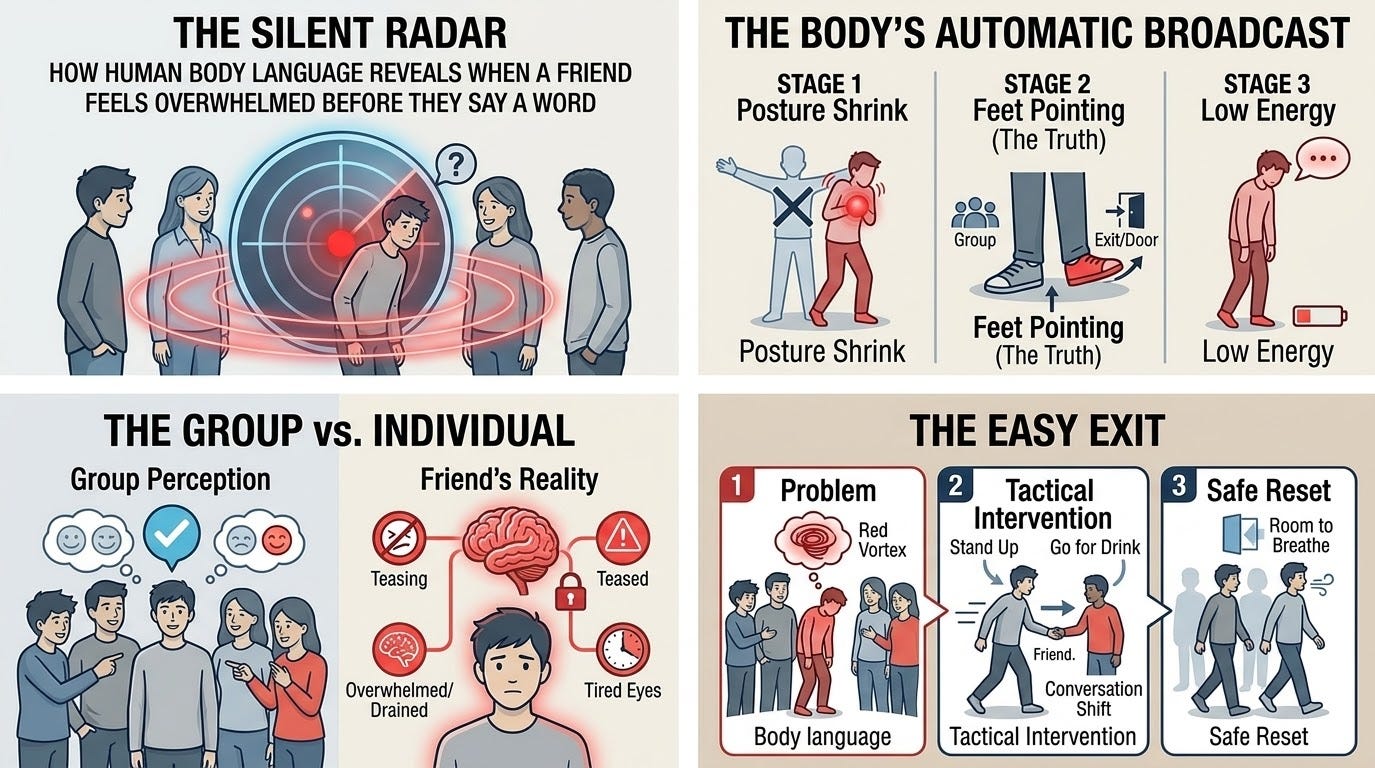
The Mechanism
People rarely say "I am uncomfortable" out loud. In a group setting, speaking up feels risky because nobody wants to look sensitive or ruin the mood. Words are carefully chosen by the thinking brain, but physical reactions are triggered automatically by the nervous system.
When a person feels left out, teased or overwhelmed, their body goes into low-key defense mode. First, their posture shrinks. Shoulders pull up and arms cross tightly over the chest or a backpack. Second, their feet tell the truth. People naturally point their feet toward what they care about. If a friend is facing the group but their shoes point toward the exit, their brain is looking for a way out. Third, their speech drops to one-word answers like "yeah" or "cool" because they are too drained to participate.
The Tactical Move: The Easy Exit
Here is how some teenagers handle this without creating drama or putting a friend on the spot.
Instead of asking "What is wrong with you?" in front of the group, they build an easy exit door. They might stand up and say: "I am going to get a drink, want to walk over with me?" or smoothly shift the conversation to a new topic. Offering a simple distraction gives an overwhelmed friend room to breathe and reset without feeling exposed.