


Why asking for extra time usually fails and how fixing the other person’s problem first gets you a yes.
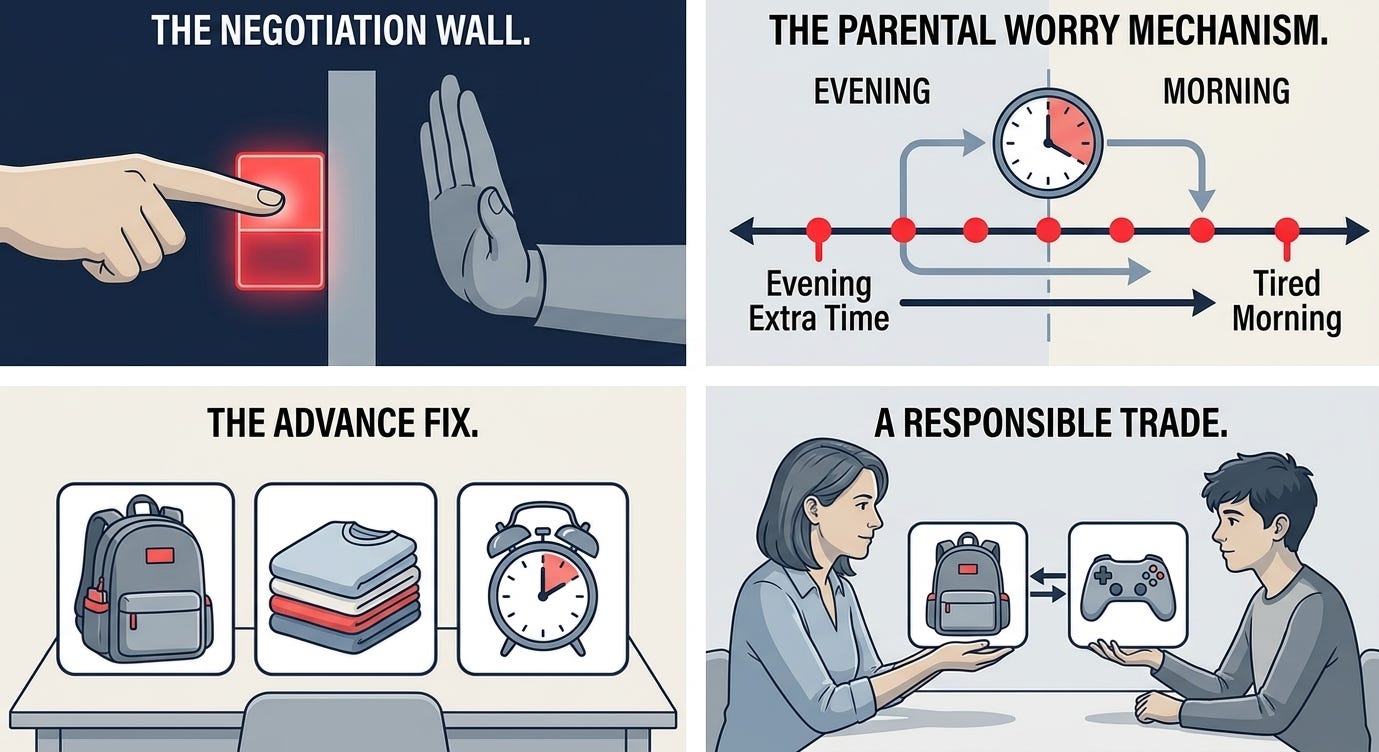
Most negotiations at home shut down in about five seconds:
“Can I stay online for one more game?”
“No, it is a school night.”
“That is not fair, everyone else is still playing.”
“I said no.”
The conversation hits a wall because it only focuses on what one person wants while ignoring what the other person is worried about.
The Mechanism
When parents say no to extra screen time or a later bedtime, they are rarely trying to ruin your fun. They are worried about tomorrow morning.
In their minds, an extra hour of gaming tonight leads directly to a messy morning. They picture tired eyes, missed alarms, forgotten homework and rushed rides to school. As long as saying yes creates extra stress for them, the easiest answer is always no. Pushing harder just confirms their fear that tonight will make tomorrow harder for everyone.
The Tactical Move: The Advance Fix
Here is how some teenagers handle this problem without arguing. They remove the morning worry before they ever ask for anything.
First, they finish their homework, pack their school bag and put their shoes by the door. When they make the ask, they show that tomorrow is already handled. They might say: “My backpack is packed, my clothes are laid out and my alarm is set for 6:45 AM. If I drag my feet tomorrow, no extra time for the rest of the week.”
By handling the chores first and putting their own privileges on the line, they remove the main reasons for a parent to say no. The conversation shifts from an argument into a simple trade.